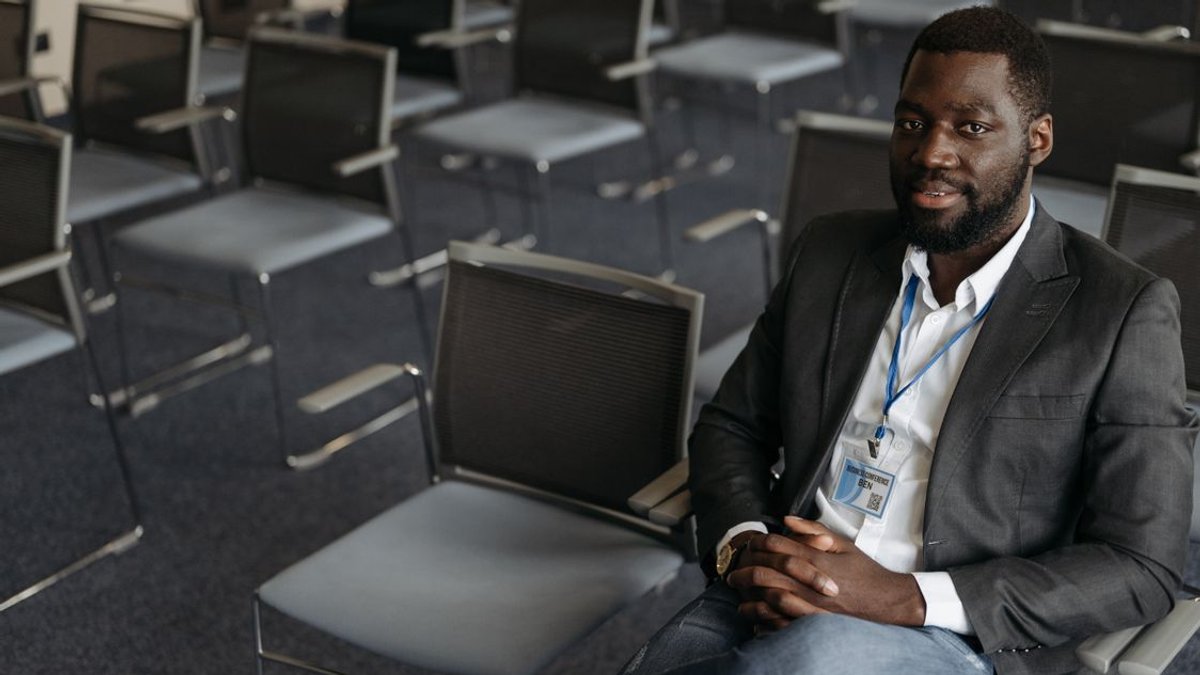
Men's Conference Dress Code: What to Wear in 2026
 Draško Georgijev
 Your clothes do a lot of talking before you open your mouth. At a conference, where you might meet forty people in a day and remember eight of them, that matters more than it does at the office.
The good news: men’s conference dressing is a solved problem. There are maybe four decisions to make, and once you’ve made them you can stop thinking about it and concentrate on why you actually flew there.
This guide covers daytime sessions, evening networking, dinners, and the footwear question that quietly ruins more conference days than anything else. It also answers the question people keep typing into Google in 2026.
Is the Suit Dead?
Short answer: no, but it’s been demoted.
Here’s what actually happened. The suit used to be the default, and dressing down was a deliberate choice. That flipped. The blazer is now the default, and the full suit is the deliberate choice, reserved for contexts where formality carries meaning.
Wear the full suit when:
- You’re at a banking, central banking, or regulatory event
- You’re presenting from a main stage
- You’re meeting investors, board members, or institutional clients
- The invitation says business formal, or a gala dinner is on the agenda
Skip the suit and wear a blazer when:
- You’re at a fintech conference, a tech conference, or a startup event
- You’re working an exhibition stand
- It’s an evening networking reception
- You genuinely don’t know, and the event isn’t finance-adjacent
The tech office question deserves a direct answer too, because it comes up constantly: a full suit in a 2026 tech office reads as either “I have a meeting with a bank today” or “I don’t work here.” Neither is fatal, but neither is what you want. At tech-sector events, the blazer does everything the suit used to do without the signalling problem.
One thing hasn’t changed. Being slightly overdressed costs you almost nothing. Being clearly underdressed at a formal event costs you credibility in the first three seconds. When the signal is genuinely ambiguous, go up, not down.
The Five-Piece Conference Wardrobe
For a multi-day conference, these five things cover nearly every scenario:
- A navy blazer. The single highest-value item you can pack. It works over a shirt, over a polo, with trousers, with dark jeans.
- Dress trousers or chinos in charcoal or navy.
- Two or three quality shirts. Oxford button-downs travel well and forgive a lot.
- Leather shoes you’ve already broken in.
- A layer. Conference halls are aggressively air-conditioned in every climate on earth.
Add a suit and a tie if the event calls for it. That’s the whole kit.
Daytime Conference Sessions
Business casual is the standard for main stages, breakout rooms, and exhibition floors at most professional conferences.
Formulas that consistently work:
The reliable default:
- Navy blazer + charcoal dress trousers + white or pale blue Oxford shirt + leather Derbies
Slightly more relaxed:
- Unstructured blazer + chinos + fine-knit polo + leather loafers
Tech conference register:
- Dark well-fitted jeans + button-down shirt + blazer + clean minimal leather sneakers
When you’re meeting banking people:
- Full suit + dress shirt + conservative tie + polished Oxfords
On colour: navy and charcoal are the foundations and you cannot go wrong with either. Grey, olive, and stone work as secondary trousers. Keep patterns quiet. A conference badge, a lanyard, and a busy shirt is three things competing for the same space.
On fit: fit matters more than price, and it isn’t close. A well-tailored inexpensive blazer outperforms an expensive one that doesn’t fit you. If you buy one thing before a conference, buy the tailoring on what you already own.
Evening Networking Events
Evening receptions run smart casual to cocktail. The daytime outfit usually gets you there with one adjustment.
Formulas:
- Dark jeans or chinos + quality shirt, no tie + blazer + leather shoes
- Dress trousers + fine merino knit + unstructured sport coat
- Dark suit, tie removed, top button undone, for cocktail-level events
The transition trick: if you’re going straight from sessions to drinks, the fastest upgrade is removing the tie and swapping shoes. Keep the blazer on. That single change moves you from business casual to smart casual without a trip back to the hotel.
For the full breakdown of this dress code, including what separates it from business casual, see our guide to smart casual for networking events.
Conference Dinners and Galas
Dinners sit a level above the daytime code. Business formal is the usual expectation, cocktail attire for gala and awards nights, and occasionally black tie at the most formal banking events.
The baseline for men: dark suit, white or pale blue dress shirt, polished leather shoes, tie optional at fintech events and expected at banking ones.
Full detail on banquets, galas, and black tie is in our conference dinner dress code guide.
Footwear: The Decision That Actually Matters
At a large conference you can walk 8 to 10 miles in a day. The Venetian Expo and the RAI are enormous, and you’ll cross them repeatedly.
This makes shoes a logistics decision, not a style one.
What works for full conference days:
- Leather Derbies or Oxfords with a rubber sole: formal enough for banking, survivable for ten hours
- Loafers: comfortable, increasingly standard, easy to wear all day
- Clean minimal leather sneakers: fine at tech and fintech events, not at banking ones
- Chelsea boots: good in cooler cities, versatile day to evening
What to avoid:
- Any shoe you haven’t broken in. A multi-day conference is the worst possible place to discover a hot spot on day one.
- Leather soles on hard exhibition flooring, unless you enjoy the feeling of standing on a plank for eight hours.
- Athletic running shoes at anything above smart casual.
Bring two pairs if you can. Alternating them across days is the single most effective comfort decision available to you.
What to Avoid
- Overdressing at tech events. A three-piece suit at a developer conference reads as out of touch with the room.
- Underdressing at finance events. This is the more expensive mistake of the two.
- Logo t-shirts that aren’t your own company’s, in context.
- Wrinkled everything. Pack a wrinkle-release spray. It costs almost nothing and salvages a shirt that spent a night in a suitcase.
- Strong fragrance. Packed exhibition halls and close-range networking make this genuinely unpleasant for everyone near you.
- A bag that doesn’t work. You’ll carry a laptop, a water bottle, and roughly two kilos of brochures you didn’t ask for.
Three-Day Packing List
- 1 navy blazer
- 1 suit, if the event or a dinner requires it
- 2 pairs of trousers or chinos
- 3 shirts, mixed formality
- 1 fine-knit polo or merino layer
- 2 pairs of shoes, both broken in
- 1 tie, packed flat, even if you doubt you’ll need it
- Wrinkle-release spray
Banking Events Are a Different Standard
Everything above assumes a general professional or fintech conference. Institutional banking is stricter, and the gap is wider than most people expect: Sibos, EBAday, central banking conferences, and regulatory summits still run on genuine business formal, where a blazer with odd trousers is considered a step down rather than a neutral choice.
If that’s your event, read the business formal standard for men at banking conferences instead of this page. It covers suit construction, tie conventions, and the specific expectations at institutional events.
Related Guides
About Draško Georgijev
Draško is a fintech product specialist with 20+ years of experience in the payments industry. He currently works as a Product Manager at Nexi Group, and previously led POS/eComm/ATM Operations at FirstDataCorp (Fiserv).
Get Latest Updates
Subscribe to our newsletter for the latest fintech event insights.
We respect your privacy. Unsubscribe at any time.
Explore Topics
Related Articles

Banking Conference Dress Code: What to Wear at Financial Services Events
February 20, 2026

Tech and Fintech Conference Outfit Ideas for Women (2026)
February 16, 2026

Smart Casual for Networking Events: What to Wear in 2026
February 14, 2026